Property Maintenance Tips for Long-Term Building Value
A well-kept building has a particular quietness about it. Doors close properly. Water sheds away without drama. Hallways feel calm. Woodwork holds its line. Stone, brick, glass, metal, and landscape all appear to be doing what they were designed to do. That sense of order is not accidental, and it is rarely the result of one grand renovation. More often, it comes from steady property maintenance, disciplined inspection, and the willingness to act before a small deficiency becomes an expensive failure.
Long-term building value is built in layers. Design matters. Construction quality matters. Location certainly matters. Yet after handover, the daily and seasonal care of the property begins to decide whether the asset matures gracefully or starts to lose value in ways that are difficult to reverse. A roof membrane can fail silently for months. A blocked perimeter drain can undermine a beautifully renovated lower level. A neglected balcony detail in a multi-family building can become a structural and legal issue. In a heritage home, the wrong repair can erase original character while still failing technically.
The finest properties are not simply maintained. They are stewarded.
Building value is preserved at the margins
Many owners think of maintenance as a cost centre, something separate from the more exciting work of design, construction, acquisition, or custom home renovations. That mindset is understandable, but it is incomplete. Maintenance is capital protection. In higher-value real estate, especially in coastal climates and dense urban markets, the difference between routine care and deferred care can reach six figures quickly.
A real estate developer looks at a building through a lifecycle lens. The best private homeowners and strata councils should do the same. A property is a system of interdependent parts. Water management, ventilation, structure, finishes, life safety, energy performance, and occupant behaviour all influence one another. If one area is ignored, another often pays the price.
Consider a luxury residence with custom millwork, natural stone floors, radiant heating, large-format glazing, and a complex roofline. The visual impression may be effortless, but the maintenance profile is sophisticated. Gutters must handle intense rainfall. Roof valleys need inspection after storm seasons. Exterior sealants around windows and doors have service lives. Mechanical systems require calibration, not just replacement filters. Landscaping must be managed so irrigation and planting beds do not hold moisture against foundation walls.
The same principle applies to multi-Family building maintenance. In a building with dozens of households, the value of preventive care multiplies. A minor leak from one unit can affect several homes below. A worn door closer can compromise security and energy performance. Poorly maintained parkade drains can produce water damage and slip risks. A disciplined maintenance program protects owners, tenants, managers, insurers, and future purchasers.
The building envelope deserves first priority
If there is one lesson repeated across private homes, heritage restorations, and larger residential buildings, it is this: water is patient. It finds weak points long before people notice stains or swelling. By the time a ceiling shows a brown ring or a baseboard begins to cup, the building may already have absorbed far more moisture than expected.
The building envelope includes the roof, walls, windows, doors, cladding, balconies, decks, foundations, and every transition between them. Its job is to keep weather out while allowing the building to dry safely. In practice, failures often occur not in the middle of a material but where materials meet. Window-to-wall junctions, roof-to-wall intersections, balcony membranes, parapets, chimneys, flashings, and penetrations for vents or services all deserve special attention.
On a high-end home, these details are often concealed by elegant finishes. That makes regular inspection even more important. A clean-lined modern façade may have fewer visible clues than an older house with exposed trims and overhangs. A luxury renovation with large sliding doors and flush thresholds can perform beautifully, but only if drainage, slope, waterproofing, and sealants are checked over time.
In Vancouver and similar coastal markets, buildings experience frequent rain, damp winters, and shifting seasonal temperatures. Owners considering Vancouver luxury home renovations often focus on interior upgrades, kitchens, spa bathrooms, wine rooms, media spaces, and expanded glazing. Those investments are most secure when the envelope is assessed first. It is rarely wise to install premium interior finishes beneath a roof, wall assembly, or drainage system that has not been carefully evaluated.
A practical rhythm works best. Roofs and drainage should be reviewed before and after the wettest seasons. Sealants and exterior coatings should be checked annually, even if replacement happens on a longer cycle. Balconies and decks should be inspected for slope, soft spots, membrane damage, railing connections, and blocked drains. Below grade, sump systems, perimeter drainage, and foundation moisture should not be left until a storm exposes a weakness.
Mechanical systems should be maintained as assets, not appliances
Mechanical rooms often reveal the true condition of a property. A polished entry and immaculate kitchen can distract from equipment that is overdue for service, poorly labelled, or installed without enough clearance for proper maintenance. In luxury properties, the mechanical systems may include radiant heating, heat pumps, boilers, HRVs or ERVs, filtration systems, smart controls, irrigation, pool equipment, backup power, snow-melt systems, elevators, or sophisticated lighting controls.
These systems are not set-and-forget conveniences. They are capital assets. When tuned correctly, they protect comfort, air quality, energy efficiency, and building durability. When neglected, they shorten their own life and sometimes damage the building around them.
A common example is ventilation. A home may feel warm and quiet, but if humidity remains too high through the winter, condensation can form on windows or within assemblies. Bathrooms, laundry rooms, kitchens, and lower levels are particularly sensitive. In multi-family buildings, ventilation imbalance can create odour transfer, moisture problems, and occupant complaints that are difficult to diagnose after the fact.
Another example is hydronic heating. Radiant systems are prized for comfort, especially in custom homes. Yet pumps, mixing valves, manifolds, expansion tanks, and controls all need periodic review. A small leak or pressure issue can sit unnoticed until flooring or cabinetry is affected. Similarly, domestic hot water systems in larger buildings deserve close monitoring because a failure can inconvenience many residents at once.
Documentation is part of maintenance. Every service visit should leave behind useful records, not just a paid invoice. The date, technician, observed issue, corrective action, parts used, and recommended next step should be recorded in a central file. Over several years, that file becomes a valuable diagnostic tool. It also supports resale confidence because prospective buyers and their advisors can see that the building has been properly cared for.
A maintenance calendar is more useful than a memory
Owners often underestimate how much building care depends on timing. The right task done too late can still be expensive. Cleaning gutters after water has backed into a soffit is not the same as cleaning them before the first major rain. Servicing a boiler after repeated lockouts is not the same as servicing it before heating season. Inspecting exterior paint after bare wood is exposed is not the same as catching early cracking.
A maintenance calendar does not need to be complicated, but it should be written, shared, and followed. For a large residence or multi-family property, it should include seasonal checks, annual reviews, and longer-cycle capital planning. The most successful owners treat the calendar as a living document. When a pattern appears, such as one drain blocking repeatedly or one elevation weathering faster than the others, the plan changes.
A concise annual framework might include:
- Spring review of roofs, gutters, downspouts, exterior sealants, drainage paths, landscaping, irrigation start-up, and winter damage.
- Summer attention to exterior painting, deck or balcony maintenance, window cleaning, masonry review, pest entry points, and capital projects that need dry weather.
- Autumn preparation for heavy rain, including roof debris removal, drain testing, sump inspection, heating service, weatherstripping, and exterior lighting.
- Winter monitoring of condensation, indoor humidity, freeze risks, drainage during storms, snow or ice loads where relevant, and occupant comfort issues.
- Year-end review of maintenance records, warranties, reserve planning, insurance requirements, and priorities for the next budget cycle.
This kind of structure protects decision-making. It prevents urgent tasks from crowding out important ones. It also makes maintenance less emotional. Rather than debating every item from scratch, owners can compare the building’s current condition against an agreed rhythm.
Heritage properties require restraint as well as skill
Heritage restorations occupy a different category of maintenance. Older buildings often contain materials and assemblies that perform well when treated properly and fail when modern assumptions are imposed carelessly. Original wood windows, lime-based masonry, heavy timber, plaster, stone, and traditional millwork all demand respect. The goal is not to freeze a building in time. The goal is to preserve character while improving performance in a technically sound way.
One of the greatest risks in heritage work is the enthusiastic but inappropriate repair. Hard modern mortar used on softer historic brick can cause the brick face to deteriorate. Impermeable coatings can trap moisture inside walls that were designed to breathe. Replacing original windows without understanding their joinery, glass, proportions, or repair potential can diminish the building’s value and architectural integrity.
Maintenance on heritage properties should begin with observation. Which elevations receive the harshest weather? Where has previous repair work failed? Are there signs of settlement, rot, insect activity, paint failure, or trapped moisture? Are gutters and downspouts historically appropriate but undersized for current rainfall patterns? Has insulation been added in a way that changes drying potential?
Specialist restoration firms often focus on historic preservation, restoration, millwork, general contracting, building repair, building envelope work, surface restoration, waterproofing, structural repairs, masonry or façade restoration, roofing, concrete repairs, and other services that suit older or complex buildings. Those capabilities differ from ordinary renovation work. A contractor who can build a real estate developer new kitchen beautifully may not be the right person to repair a historic cornice, restore original sash, or diagnose moisture movement through old masonry.
For owners, the trade-off is usually time and cost. Proper heritage maintenance can feel slower than replacement. Yet sensitive repair often preserves value that cannot be bought back later. Original fabric carries cultural, aesthetic, and market value. Once removed, it is rarely recreated with the same authenticity.
Renovation and maintenance should be planned together
Custom home renovations often begin with aspiration. A family wants more light, better flow, a larger kitchen, a refined primary suite, improved entertaining space, or a stronger connection to the garden. Those ambitions matter. A beautiful renovation can transform how a property lives. But the most successful projects integrate maintenance thinking from the earliest design conversations.
A renovation can either reduce future maintenance or quietly increase it. Minimalist exterior details may look exquisite, but they need careful water management. Flat roofs can be elegant and practical, but only with robust membranes, drainage redundancy, and accessible inspection points. Natural materials develop patina, which can be desirable, but owners should understand the difference between graceful aging and deterioration. Expansive glazing improves views and daylight, but seals, hardware, shading, and cleaning access matter.
Experienced custom home builders in Vancouver BC understand that climate shapes details. A Vancouver home builder working on a luxury residence must consider rain exposure, site slope, mature trees, soil moisture, permitting, neighbourhood context, and the long-term serviceability of concealed systems. The construction phase is the ideal time to make maintenance easier. Access panels can be located intelligently. Mechanical rooms can be designed with working clearance. Roof anchors, drainage cleanouts, shutoff valves, and service routes can be planned before finishes hide them.
The same thinking applies to substantial Vancouver luxury home renovations. If walls are open, it may be prudent to review insulation, air sealing, wiring, plumbing, seismic considerations, ventilation, and drainage rather than focusing only on visible upgrades. These decisions are not glamorous, but they protect the visible investment.
There is a useful discipline in asking, “Who will maintain this in five years, and how?” If the answer is unclear, the detail needs more thought.
Multi-family buildings need governance, not just repairs
Multi-family properties have a distinct maintenance challenge because the building is shared, but wear is distributed unevenly. Some residents report issues immediately. Others wait. Some areas receive heavy use, while others are out of sight. Decision-making may involve councils, boards, property managers, owners, tenants, insurers, engineers, and contractors. Without governance, even a well-built property can drift into deferred maintenance.
Good multi-Family building maintenance depends on clear responsibility. Someone must own the maintenance calendar. Someone must review reports. Someone must compare quotes intelligently. Someone must communicate with residents before work begins and after it is complete. Without that chain, small issues linger.
The financial planning is just as important. Larger buildings require reserve thinking because major components have predictable service lives. Roofs, windows, elevators, boilers, parkade membranes, exterior cladding, fire systems, and common-area finishes cannot be treated as surprises. Their eventual renewal should be anticipated years in advance. A responsible property manager or council will avoid the false economy of choosing the lowest immediate cost when a more durable repair would better protect the asset.
Communication also preserves value. Residents are more cooperative when they understand why maintenance matters. A balcony inspection may inconvenience people, but if explained as a safety and asset-protection measure, access becomes easier. Drain cleaning, fire alarm testing, façade inspections, and parkade work all benefit from respectful scheduling and clear notices. Luxury service is not only about materials. It is about reducing friction for the people who live in the building.
The exterior landscape can either protect or punish the structure
Landscaping frames a property, but it also influences building performance. Mature gardens, stone terraces, reflecting pools, irrigation systems, retaining walls, and dense planting can all enhance value. They can also direct water toward the building, conceal decay, or create maintenance burdens if not managed carefully.
The most common landscape-related building issues are surprisingly simple. Soil is allowed to build up against siding. Mulch holds moisture against wood trim. Irrigation oversprays onto walls or windows. Vines trap dampness and hide cracks. Tree roots interfere with drainage. Surface grading settles over time and begins sending water back toward the foundation.
On luxury properties, landscape and architecture are often tightly integrated. That makes coordination essential. Gardeners, arborists, drainage contractors, and building maintenance professionals should not operate in isolation. A gardener may prioritize plant health and visual fullness, while a building specialist may see moisture risk. Both perspectives matter. The best outcomes come when they are reconciled.
A property walk after heavy rain is invaluable. Watch where water actually goes, not where drawings suggest it should go. Look for ponding at patios, overflowing gutters, water staining on walls, erosion at downspouts, and saturated planting beds near foundation lines. These observations often reveal more than a fair-weather inspection.
Documentation turns maintenance into value
A building with excellent maintenance records sells differently from one with vague assurances. Buyers, lenders, insurers, and advisors all respond to evidence. Records demonstrate care. They reduce uncertainty. They help distinguish a property that has been cosmetically refreshed from one that has been properly managed.
Useful documentation does not need to be elaborate, but it should be organized. Keep permits, drawings, warranties, manuals, inspection reports, service records, photographs, contractor correspondence, product specifications, and maintenance schedules in one accessible system. For multi-family buildings, meeting minutes and capital planning documents should align with maintenance actions. For private homes, a digital binder can be as valuable as a fine appliance package when it comes time to sell.
Photographs are particularly helpful. A dated photo of a wall assembly before it was closed, a drainage repair before backfill, or a roof detail during replacement can answer questions years later. In custom work, concealed quality matters enormously. If no one can see it, documentation helps prove it exists.
There is also a practical benefit during emergencies. When a pipe bursts or a system fails, clear records help trades respond faster. Knowing where shutoffs are located, what equipment was installed, and who last serviced it can reduce damage and confusion.
Choosing the right specialists
Not every property needs the same team. A condominium tower, a heritage residence, a custom waterfront home, and a small rental building require different expertise. The key is to match the professional to the building’s needs rather than relying on a single label.
Some firms specialize in old and historic homes and buildings, including historic preservation, restoration, millwork, general contracting, and building repair. Others focus on complex historically appropriate restorations or renovations for residences, churches, and civic buildings, with attention to building envelope work, surface restoration, and specialty restoration. Some restoration contractors concentrate on exterior restoration, waterproofing, structural repairs, masonry and façade restoration, roofing maintenance, and concrete repairs. Others provide water, fire, storm, and mold restoration for homeowners, property managers, HOAs, and multifamily communities.
Those distinctions matter. A water-damage restoration company may be excellent after a flood but not suited to a historically sensitive millwork repair. A custom builder may deliver a superb new residence but may not offer ongoing multi-family maintenance. A façade restoration specialist may understand masonry and waterproofing better than a general handyman. When owners search for a real estate developer, Vancouver home builder, or terms such as T. Jones Group Vancouver, they should verify the actual scope of services rather than assuming one company covers development, custom construction, renovations, heritage work, and maintenance.
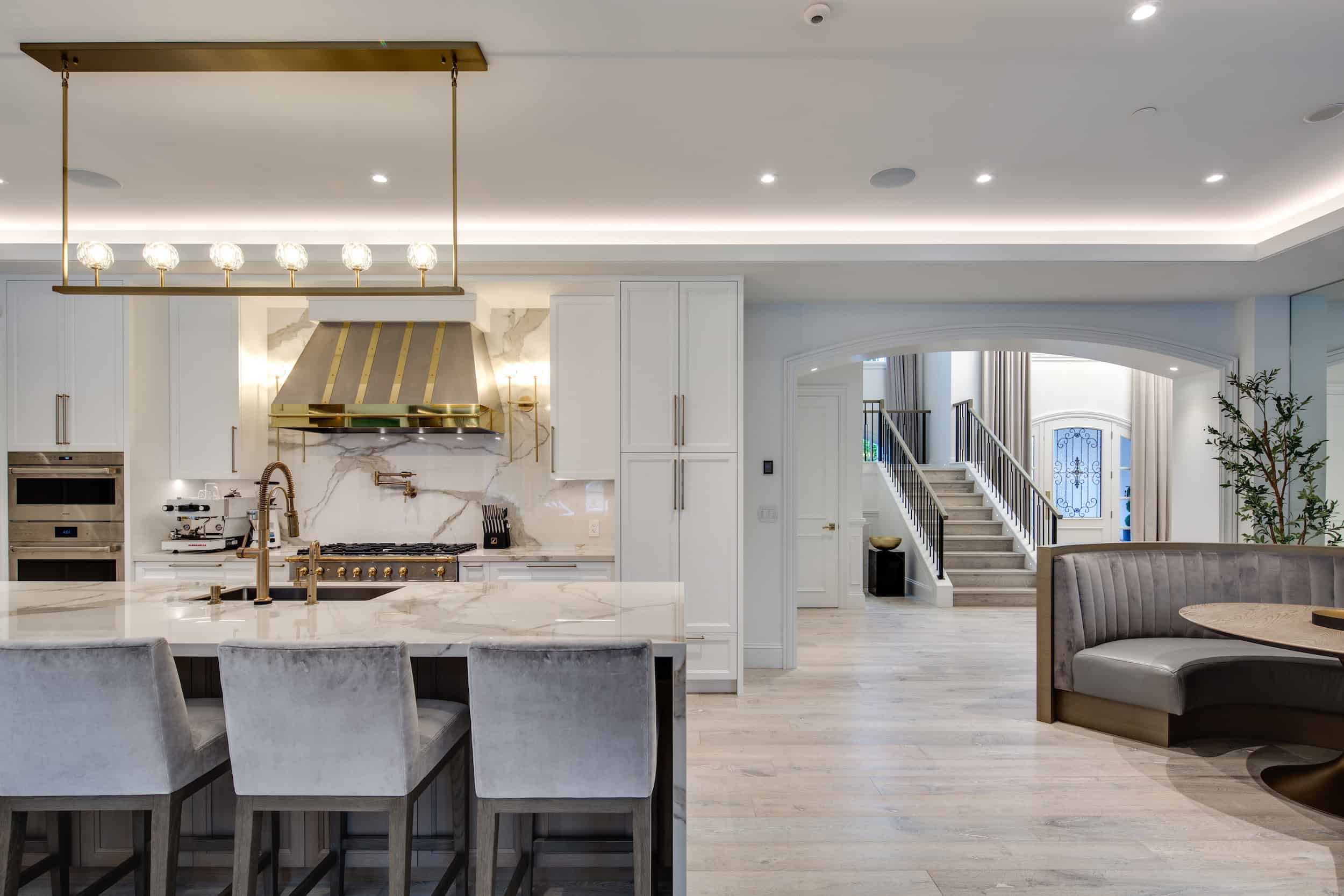
A careful selection process should consider:
- Relevant experience with the specific property type, whether heritage, luxury custom, multi-family, or mixed-use.
- Evidence of technical understanding, especially around water management, structure, ventilation, and material compatibility.
- Clear documentation practices, including written scopes, photographs, maintenance notes, and warranty information.
- Willingness to explain trade-offs rather than simply recommend the fastest or most expensive option.
- Appropriate licensing, insurance, references, and familiarity with local permitting or strata requirements where applicable.
The right specialist does more than complete a task. They help the owner make better decisions. That advisory quality is often what separates a durable repair from a temporary patch.
The hidden cost of deferred maintenance
Deferred maintenance rarely announces itself honestly. A skipped service visit may save a few hundred dollars. A postponed roof repair may preserve cash for the quarter. A small crack, stain, or soft spot may seem tolerable. The cost appears controlled until it is not.
The trouble is that building failures compound. Water intrusion can damage structure, insulation, drywall, flooring, electrical systems, cabinetry, and indoor air quality. A failing exterior coating can expose wood, which then requires carpentry rather than repainting. A neglected mechanical system can consume more energy for years before it finally fails. In multi-family buildings, delay can also increase legal exposure and insurance difficulty.
Luxury properties carry additional risk because finishes are expensive and often bespoke. Replacing standard drywall is one matter. Repairing custom plaster, imported stone, matched veneer panels, or integrated lighting details is another. The more refined the finish, the more important it is to protect the assemblies behind it.
There is also reputational value. A well-maintained building earns confidence from residents, neighbours, trades, agents, and buyers. A poorly maintained one develops a story, and stories are hard to unwind. Once a property is known for leaks, odours, disputes, or recurring failures, even completed repairs may not fully restore trust.
Maintenance after a major renovation
The months after a renovation are a critical adjustment period. New materials settle. Systems need balancing. Occupants use spaces in ways drawings cannot predict. Small corrections are normal, even on excellent projects. What matters is whether they are tracked and resolved properly.
After custom home renovations, owners should expect a formal deficiency review, seasonal follow-up, and clear warranty documentation. Heating and cooling systems may need adjustment after the family has lived through both warm and cool weather. Exterior drainage should be observed during real rainfall. Cabinetry, doors, and woodwork may respond to humidity changes. Stone and tile should be reviewed for movement, grout cracking, or sealant performance.
A renovation handover should include more than keys and congratulations. It should teach the owner how the renewed building works. Where are the shutoffs? Which products require sealing or special cleaning? What maintenance voids a warranty? How often should filters be changed? Which trades should be called for future service? A beautiful project without this transfer of knowledge is incomplete.
For larger buildings, post-project maintenance is even more important. After envelope repairs, balcony renewals, roofing work, or mechanical upgrades, the building team should monitor performance and retain closeout documents. If a problem appears later, the ability to refer back to the original scope, photos, warranties, and consultant reports can save considerable time.
Preserving elegance through ordinary discipline
The word maintenance can sound modest, even mundane. Yet in the finest buildings, it is the discipline that keeps luxury from becoming fragile. Polished stone remains beautiful because water is controlled. Custom millwork endures because humidity is managed. Heritage character survives because repairs are informed and restrained. Multi-family buildings hold value because governance, records, and capital planning prevent avoidable decline.
A property does not need constant intervention. It needs attentive stewardship. The owner who walks the exterior after storms, reads service reports, budgets for renewal, hires the right specialists, and respects the building’s materials will usually spend less over time than the owner who waits for visible failure. More importantly, the building will feel better. It will carry itself with the ease that comes from being understood.
Long-term value is not protected by a single inspection or a once-a-decade renovation. It is protected by a pattern of decisions, some small, some substantial, all guided by the same principle: care for the building before it has to ask.
Address: #20 – 8690 Barnard Street, Vancouver, BC V6P 0N3, Canada
Phone: 604-506-1229
Website: https://tjonesgroup.com/
Email: [email protected]
Hours:
Monday: 8:00 AM - 5:00 PM
Tuesday: 8:00 AM - 5:00 PM
Wednesday: 8:00 AM - 5:00 PM
Thursday: 8:00 AM - 5:00 PM
Friday: 8:00 AM - 5:00 PM
Saturday: Closed
Sunday: Closed
Open-location code (plus code): 6V44+P8 Vancouver, British Columbia, Canada
Map/listing URL:
Socials:
https://www.instagram.com/tjonesgroup/
https://www.facebook.com/TheT.JonesGroup
https://www.houzz.com/professionals/home-builders/t-jones-group-inc-pfvwus-pf~381177860
The company also handles multi-family construction, home maintenance, and investment advisory for property owners who want a builder with both design coordination and construction experience.
With its office on Barnard Street in Vancouver, the business is positioned to support custom home and renovation projects across the city.
Public site pages emphasize clear communication, disciplined project management, and craftsmanship meant to hold long-term value rather than short-term fixes.
T. Jones Group collaborates closely with architects, interior designers, consultants, and trades from early planning through completion.
The brand presents more than four decades of family-led building experience in Vancouver’s residential market.
Homeowners planning a custom build, estate renovation, or heritage restoration can call 604-506-1229 or visit https://tjonesgroup.com/ to start a consultation.
The business also maintains a public Google listing that can be used as a map reference for the Vancouver office.
Popular Questions About T. Jones Group
What does T. Jones Group do?
T. Jones Group is a Vancouver builder focused on custom homes, renovations, and related residential construction services.
Does T. Jones Group only work on new custom homes?
No. The public services page also lists renovations, heritage restorations, multi-family projects, home maintenance, and investment advisory.
Where is T. Jones Group located?
The official contact page lists the office at #20 – 8690 Barnard Street, Vancouver, BC V6P 0N3.
Who leads T. Jones Group?
The team page identifies Cameron Jones as Principal and Managing Director, and Amanda Jones as Director of Client Experience and Brand Growth.
How does the company describe its process?
The public process page says projects begin with an initial consultation to understand the client’s vision, lifestyle, property, goals, budget, and timeline, followed by collaboration with architects and interior designers through completion.
Does T. Jones Group work on heritage restorations?
Yes. Heritage restorations are listed on the official services page as a distinct service area focused on preserving original character while improving structure, livability, and performance.
How can I contact T. Jones Group?
Call (604) 506-1229, email [email protected], visit https://tjonesgroup.com/, and follow https://www.instagram.com/tjonesgroup/, https://www.facebook.com/TheT.JonesGroup, and https://www.houzz.com/professionals/home-builders/t-jones-group-inc-pfvwus-pf~381177860.
Landmarks Near Vancouver, BC
Marpole: A major south Vancouver neighbourhood and a gateway from the airport into the city. If your project is in Marpole or nearby southwest Vancouver, T. Jones Group’s Barnard Street office is close by. Landmark link
Granville high street in Marpole: A walkable commercial stretch with shops, services, and neighbourhood activity along Granville Street. If your property is near Granville, the Vancouver office is well positioned for local custom home or renovation planning. Landmark link
Oak Park: A well-known community park near Oak Street and West 59th Avenue. If you live near Oak Park, T. Jones Group is a practical Vancouver option for custom home and renovation work. Landmark link
Fraser River Park: A recognizable riverfront park with boardwalk views along the Fraser. If your project is near the Fraser corridor, the company’s south Vancouver office gives you a nearby point of contact. Landmark link
Langara Golf Course: A familiar south Vancouver landmark with strong local recognition. If your home is near Langara or south-central Vancouver, T. Jones Group is a local builder to consider for custom residential work. Landmark link
Queen Elizabeth Park: Vancouver’s highest point and a common geographic anchor for central Vancouver. If your property is around central Vancouver, the company remains well placed for city-based projects. Landmark link
VanDusen Botanical Garden: A major west-side destination near Oak Street and West 37th Avenue. If your home is near Oak Street or west-side Vancouver corridors, the office is still nearby for planning and consultations. Landmark link
Vancouver International Airport (YVR): A practical regional marker for clients coming from the south side or traveling into Vancouver for project meetings. If you are near YVR or Sea Island connections, the office is easy to place within the south Vancouver area. Landmark link